Body Contouring Surgery
Mini Tummy Tuck (Mini-Abdominoplasty)
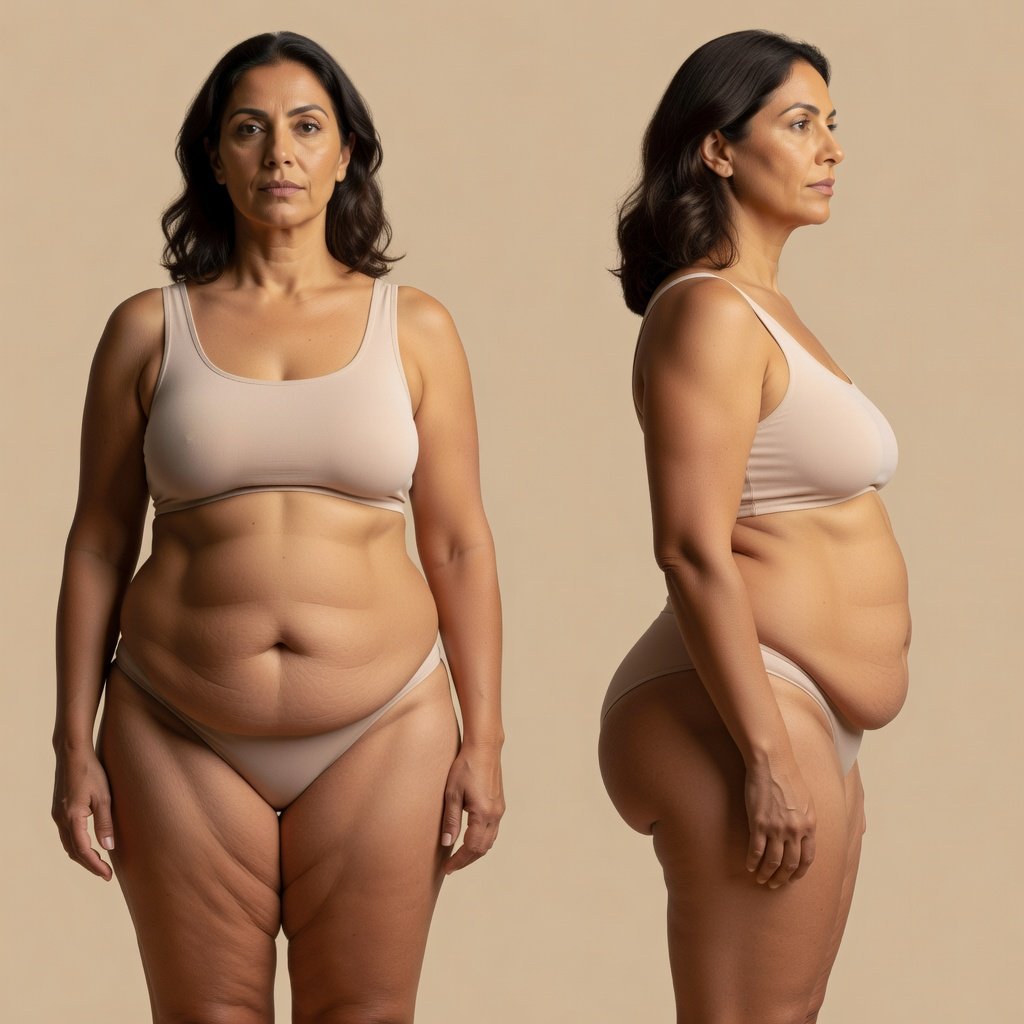
A mini tummy tuck, or mini-abdominoplasty, is a more targeted and limited version of the full abdominoplasty. It addresses a very specific anatomy: women with localised excess skin and/or fat in the lower abdomen only — the zone below the navel — where tissue refuses to respond to diet and exercise. The key anatomical distinction: the navel is not moved or re-positioned, eliminating the peri-umbilical scar and significantly shortening both operating time and recovery.
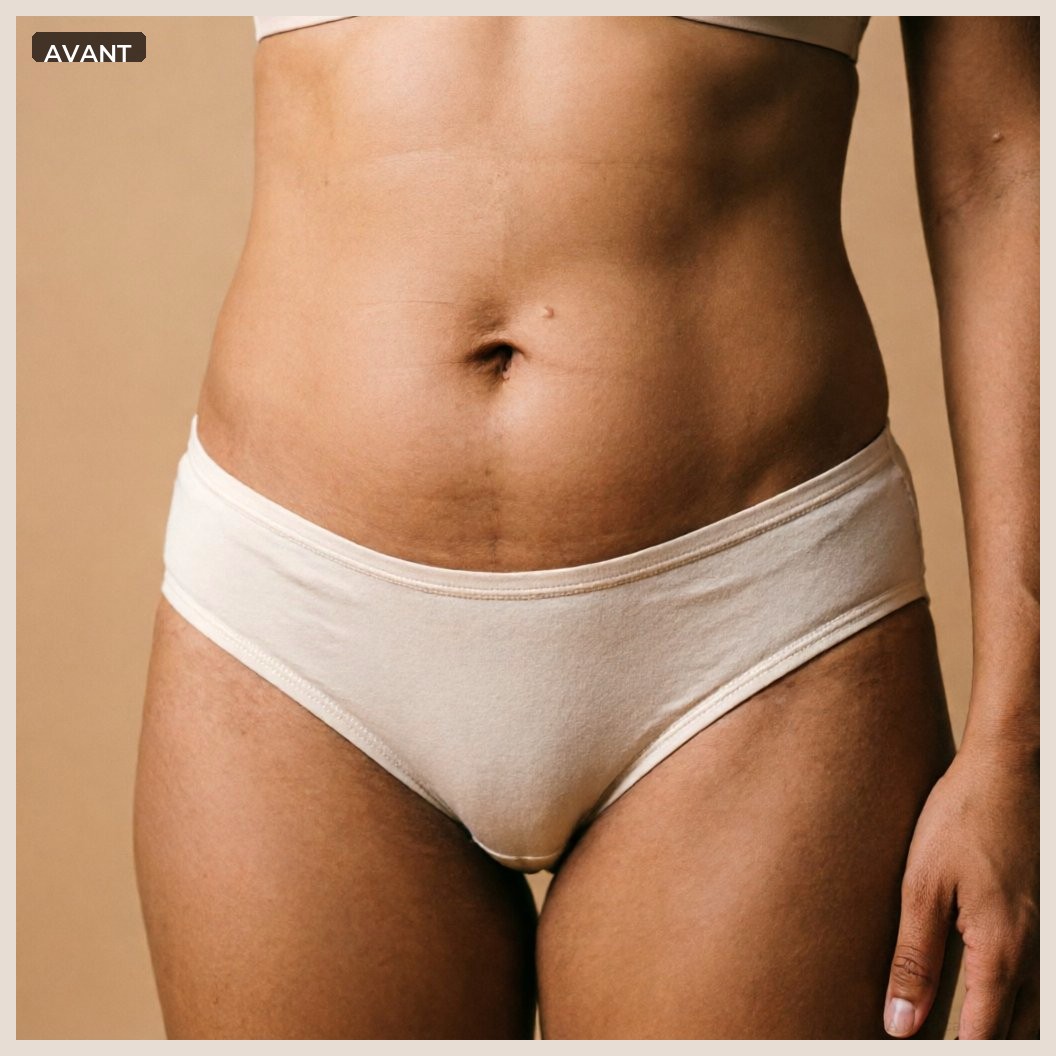
Before
Swipe to compare
Tap to enlarge
What Is a Mini Tummy Tuck?
A mini tummy tuck, or mini-abdominoplasty, is a more targeted and limited version of the full abdominoplasty. It addresses a very specific anatomy: women with localised excess skin and/or fat in the lower abdomen only — the zone below the navel — where tissue refuses to respond to diet and exercise. The key anatomical distinction: the navel is not moved or re-positioned, eliminating the peri-umbilical scar and significantly shortening both operating time and recovery.
Key Benefits
- Moderate lower abdominal skin excess that persists despite stable weight
- Mild skin apron in the lower abdomen following pregnancy or weight loss
- Stretch marks and skin laxity in the infra-umbilical zone
- Mild rectus diastasis limited to the lower abdomen
Ideal Candidates
Ideal Candidates
- Moderate skin excess strictly localised below the navel
- Toned and non-lax upper abdomen
- No significant diastasis along the full length of the linea alba
- Stable weight for at least 6 months
- Non-smokers or confirmed cessation 4 weeks prior to surgery
- Completed maternity plans
- Good general health without anaesthetic contraindications
Contraindications
- Skin excess extending above the navel → full abdominoplasty required
- Significant full-length diastasis → full abdominoplasty required
- BMI > 30
- Active, uninterrupted smoking
- Severe coagulation disorders
- History of major abdominal surgery (case-by-case evaluation)
Dr. Nahed Fathi Ahmed's Technique
Duration: 1.5 to 2.5 hours
1
Pre-operative consultation
Full clinical assessment, preliminary markings, blood tests, anaesthetic evaluation, cessation of smoking and anticoagulants.
2
Pre-operative markings
Dr. Fathi marks the resection boundaries and final scar position on the standing patient, placing the incision within the bikini line.
3
General anaesthesia
Administered by the dedicated anaesthesia team.
4
Low incision
Short horizontal incision strictly below the navel, in the natural bikini fold.
5
Limited skin undermining
Elevation of the skin flap between incision and navel.
6
Muscle plication
If mild lower diastasis is present, suturing of the rectus muscles with permanent sutures.
7
Traction and resection
Downward traction of the skin flap, excision of the lower skin excess.
8
Careful multi-layer closure
Deep sutures and intradermal surface suture.
9
Compressive garment
Abdominal binder applied before leaving the operating room.
Recovery Timeline
Recovery timeline
Days 1–3
Abdominal tightness, mild pain managed with analgesics, moderate fatigue. Rest, gentle walking encouraged.
Weeks 1–2
Residual swelling, natural slightly bent posture. Abdominal binder 24/7, no lifting > 5 kg, no driving.
Weeks 3–4
Noticeably improved comfort, swelling decreasing. Sedentary work resumable, regular walking authorised.
Months 2–3
Scar still pink but flat, abdomen refining. Daytime binder, light sport permitted.
Months 4–6
Near-final result, scar fading. Full sport gradually resumed, sun protection on scar mandatory.
Month 12
Stable result, discreet scar. Annual review consultation with Dr. Fathi.
Post-operative care
- Wear abdominal binder 24/7 for the first 2 weeks
- Gentle walking from the day after surgery
- No lifting > 5 kg for 3 weeks
- SPF 50+ sun protection on scar for 12 months
Important restrictions
- No driving for 2 weeks
- No intense sport before 6–8 weeks
- Avoid sudden trunk flexion in the first few days
- No hot baths, hammam or swimming pool for 4 weeks
Results
Results timeline
Near-final result visible at 4–6 months, definitive at 12 months.
Longevity
Results are long-lasting provided weight remains stable. The excised skin does not grow back.
What to expect
- Flatter, firmer lower abdomen below the navel
- Discreet scar within the bikini line
- Faster recovery than a full tummy tuck
- Near-final result visible at 4–6 months
See our results
Discover our patients' transformations
Pricing — Mini Tummy Tuck
Starting from
30 000 MAD
This price includes
- Surgical fees
- Anaesthesia
- One night clinic stay
- Abdominal postoperative binder
- Dressings
- All follow-up consultations included
Prices shown are estimates and may vary depending on the complexity of your case. A personalized quote will be provided during your consultation.
Frequently Asked Questions
A mini tummy tuck targets only the lower abdomen below the navel, with a shorter incision and no belly button repositioning. A full abdominoplasty addresses the entire abdominal wall, repositions the navel, corrects significant diastasis, and removes a much larger quantity of skin.
No — they treat different issues. Liposuction removes excess subcutaneous fat but does not address skin laxity. Mini-abdominoplasty excises excess skin and can tighten muscles, but removes little fat. The two can be combined in the same operative session.
The incision is placed within the natural bikini fold. The scar is covered by most swimwear and underwear. It will be pink for the first 3 to 6 months, then gradually fade to become very discreet at 12 to 18 months.
It is strongly recommended to complete your maternity plans before a mini tummy tuck. A subsequent pregnancy can re-stretch the lower abdominal skin and reduce the benefit of the procedure.
Ideally, you should be at a stable weight for at least 6 months. The mini tummy tuck is not a weight-loss technique. A BMI above 30 increases surgical risks.
The mini tummy tuck offers approximately twice the recovery speed. Light activity can resume in 10 to 14 days and moderate sport from 6 to 8 weeks.
Questions about mini-abdominoplastie?
Chat directly with our team on WhatsApp for a quick and personalized response.